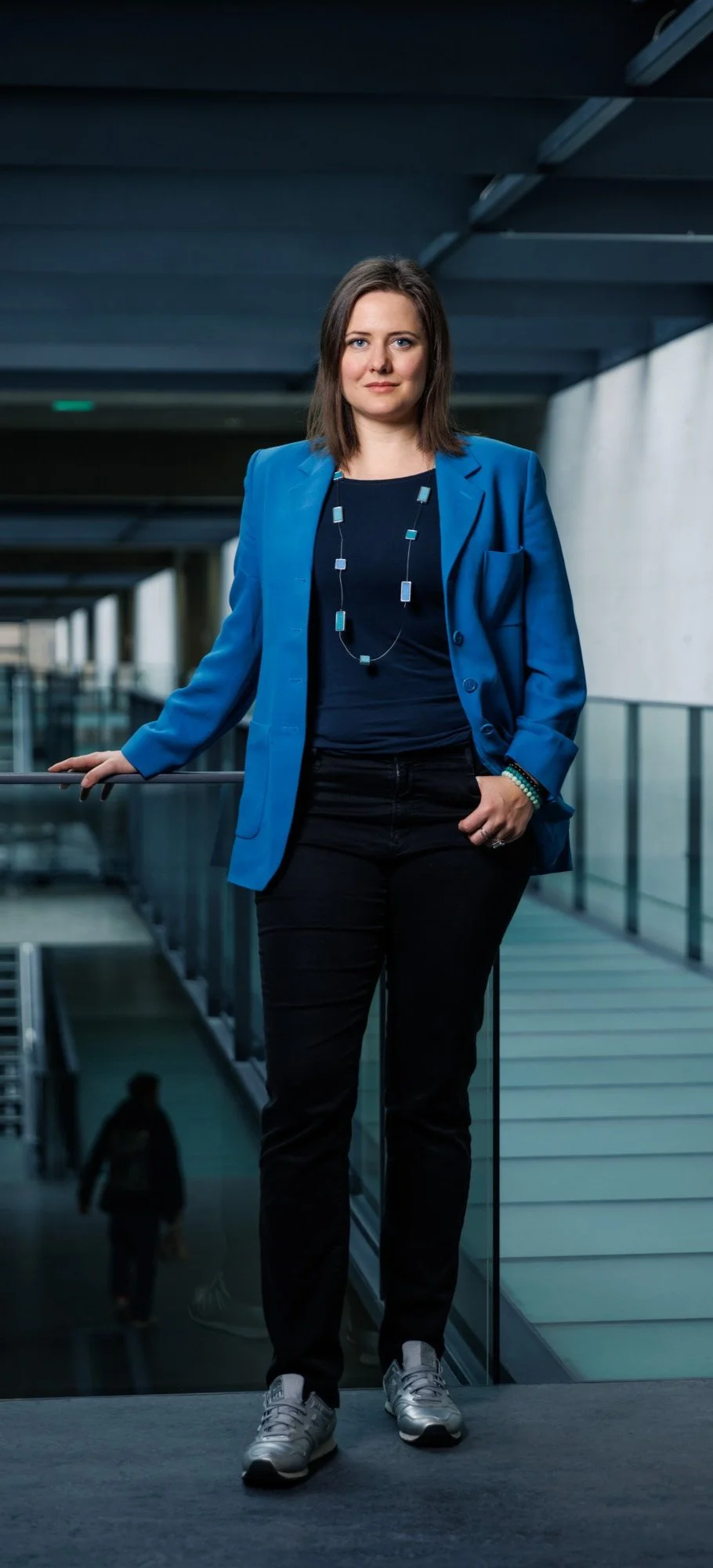
I like considering the bigger picture while keeping in mind that details matter.
Many years' experience in the film industry. Travelled by myself from Istanbul to Phnom Phen. Managed my own company. And much more, too.
Volunteered as college newspaper editor in chief and as a student representative in various university organs. Bilingual M.A. degree (French/German) in Sociology, Information Systems and Economics from Fribourg University. Currently involved in a research project in Digital Humanities at EPFL. PhD candidate at UNIL (Laboratory of Digital Cultures and DH).
Believing in integrity, which is doing the right thing even if no one will know, I love authentic people. And to play the piano.
This is my personal page. Welcome!

Teens are sharing more information about themselves on social media sites than they have in the past, but they are also taking a variety of technical and non-technical steps to manage the privacy of that information.
Post-divorce, the Internet has become a personal minefield. There was the time shortly after the split when LinkedIn suggested I connect with my ex’s new boyfriend. There was a time when Facebook kept surfacing “remember this moment?” photos of me and my ex […].
Worst of all is Gmail, which has one of the most maddening “features” to confront anyone going through a breakup. Nearly every time I wrote an e-mail to friends this past year, Gmail oh-so-helpfully suggested I include my ex-wife in the e-mail. And you can’t turn this off. It still happens, despite my pleas to Google to make it optional. (Google obviously doesn’t employ enough divorcees.)
[S]ociological theories which are not borne out by empirical work are useless. They hardly deserve the status of theories.
Norbert Elias - The Court Society
Another quote from Elias that is going straight into the thesis.
(via thepovertyoftheory)The length of the average dissertation from the top fifty majors, visualized. The humanities and social sciences – anthropology, history, and political science – clock in longest, whereas “hard” sciences like economics, mathematics, and biostatistics tend to be shortest.
[…] over 80% of Wikipedia’s editors are young, white, child-free men, which means that their perspective is what largely dominates how information is organized, framed and written. There’s nothing inherently wrong with a young, white, child-free man’s perspective, of course– it’s just that there are tons of other perspectives in the world that should influence how a story gets told.
I took part in the Theorizing the Web conference last weekend, organized by Nathan Jurgenson and PJ Rey. It was really fun, and I was honored to be on a panel with danah boyd and Zeynep Tufekci, two of my favorite internet thinkers. Unfortunately I didn’t get to see many of the other presentations. But it got me thinking about why it’s important that people like Nathan are theorizing the web*.
Theorizing the web is important because we need people thinking about how the web works who aren’t venture capitalists and start-up people looking to cash in on the next social craze. What you’re seeing with the TtW crowd is the rise of a new kind of social media criticism that is augmenting older media criticism: It’s questioning the assumptions and structures that underpin the production of social media like older media scholars questioned the production of television and newspapers. Social networks are the new television networks, at least when you think it about it in terms of hours of media consumed.If you read Nathan Jurgenson’s pieces on Snapchat or Instagram, you see someone who really values and understands the technology but is also highly skeptical and curious about how it really works. It all goes back to the question of control: Are we letting these technologies control us while Silicon Valley billionaires get rich? Or can we maintain our critical facilities and agency, while still taking advantage of social media? Theory can help us address the very real issues about social media without falling into the technophobic “is facebook making us lonely” panic that characterizes so much mainstream discourse around social media and the internet.*I originally typed this up as a comment for this Observer article, but they didn’t make it in because I think I responded too late.
In recent decades, America’s elite - its elected officials, bureaucrats, and CEOs, for starters - have succeeded spectacularly at insulating themselves from having to take responsibility for their failures. As the global economy melted down Wall Street got bailouts. CEOs who preside over shrinking companies still depart with “golden parachute” severance packages. The foreign policy establishment remains vrtually unchanged despite the catastrophic errors so many of its members made during the Iraq War. The conservative movement is failing to advance its ideas or its politica prospects, yet its institutional leaders and infotainment personalities are as profitable as ever. It is a self-evidently pernicious trend: once someone achieves insider status, their future success is less and less dependent on how competently and responsibly they perform.
… digital humanities itself functions as an organizing principle that frames how race, gender, sexuality, and ability are embodied […] focusing on the impetus on ‘making’ and ‘coding’ for humanities folks, while the comp sci / engineering / STEM folks are not required to think about, learn, or even consider how their designs create structural inequalities in (computer) code.
Google might be blinded by its own smarts. It’s an honest to god braintrust, filled with people who want to make the future. But here’s the thing about the future: it should make the way we live our lives better, not dictate the way we live our lives. It’s unintentional—the company truly thinks Google+ is super cool. And maybe it is, to the engineers behind it. But for those of us who aren’t data-crazed boy geniuses, it’s a nerdy imposition.
Google told us Android’s search would be stellar because it would know everything about our lives—where we eat, where we live, where we work, constantly following our moves and tastes in order to provide intricate answers when we need them. But the whole deal presumes we’re comfortable being followed and memorized like that. To Google, it’s a non-grievance. Who would ever care? Why would you turn down a computer that knows the details of your personal life, and can predict the next one?
We must move from the problem of ‘common-sense knowledge … What people ‘know’ as ‘reality” (Berger and Luckmann, 1966: 5) to one of embodied sensitivity, thereby explicating social reality at its level of sense - the level that is skirted by the reduction of habituality to taken-for-granted knowledge. Schutz brought sociology to the threshold, but the theoretical task remains to push to the interior, of the prereflective sociality of situations.
James M. Ostrow, Social Sensitivity: A Study of Habit and Experience
A dig at Sartre and now one at Berger and Luckmann - oh Ostrow you beautiful person.
(via robert-brydie)Another consequence of the trend to only talk about data and not society, norms, politics, values and everything else confusing about the analogue world is the victim-blaming implicit in most of these articles. The cause of the problem? Women sharing data. The solution? Women need to better control their data
Tech writers […] have focused too much on the data and have forgotten the social world in which the data is situated.
I watched this video spread around my friends, every single one of them posting what a great cause it was and this worried me. What worried me wasn’t the cause, but the way nobody questioned it.
Tableau des différents types de valeur d’une monnaie complémentaire
Jean-Michel Cornu, FING
For a long time, evolutionary psychologists have claimed that we are all imprinted with adaptive imperatives from a distant past […]. This kind of thinking frames our sense of the natural order. But what if men and women were fulfilling not biological imperatives but social roles, based on what was more efficient throughout a long era of human history? What if that era has now come to an end?
The generation of random numbers is too important to be left to chance.
When you write a scholarly work, it tends to be understood by very few people, and has one publication point over time,” he said. “But when you build a service, you can touch millions, to hundreds of millions of people directly.
I often say sociology is a martial art, a means of self-defense. Basically, you use it to defend yourself, without having the right to use it for unfair attacks.
-Pierre Bourdieu, Sociologist
Das Ganze ist mehr als die Summe seiner Teile - als Soziologin schenke ich dem Ganzen ebenso Beachtung wie dem Einzelnen.
Ich unterstütze Einzelpersonen, Unternehmen und Organisationen dabei, ihre Umwelt besser zu verstehen und sich besser in ihr zurechtzufinden.
Consulting spezialisiert auf Interaktionen und Zusammenhänge mit soziologischem Hintergrund. Beratung, Ausbildung und Support für Sie und Ihre Firma/Organisation, welche Menschen und deren Wirklichkeit berücksichtigt.
Science and research, particle physics and astronomy, talks and music… On Friday, I had the honour and pleasure of spending a very special day at CERN: a guided visit plus TEDxCERN.
For those of you who are not familiar with this acronym: it stands for Conseil Européen pour la Recherche Nucléaire and has been a bit in the news lately for discovering a new particle, most probably the Higgs boson (cf. understandable explanations of the Higgs boson).
Back to my very special day: the morning was dedicated to visiting the impressive CMS experiment facility and in the afternoon, the TEDx conference took place. We were welcomed in a tent, but the actual event was held in the beautiful Globe of Science and Innovations.
It was not my first TEDx experience, and I enjoyed the scientific emphasis. Below, I will share my personal thoughts and highlights, but would like to underline that the whole program was on a very high level.
One of my favourite catch phrase comes from entertaining Marc Abrahams and goes more or less like this:
If you do research and you know what you are going to find, you’re not doing research – you’re doing marketing.
Abrahams must know: he has been following improbable research for a long time, awarding studies that first makes you laugh, then think, with the IgNobel Prize since 1991. (A quick heads-up for people based in Geneva: an IgNobel-show will take place on May 7!)
Unsurprising for a science-heavy program, there were several speakers sharing their journey from not knowing to actual findings:
Maya Tolstoy, a marine geophysicist with an impressive track record, spoke about her noticing oddly recurrent signals in her data – which would then pave the way for the discovery of correlations between tides and seafloor seismicity. Theoretical physicist Gian Giudice showed the impact of the discovery of the Higgs boson on the calculation of the stability of the universe. (Bad news, by the way: with Giudice’s current premises, the calculations reveal a highly unstable universe; however, it seems we don’t have to worry since our sun will blow up anyway before anything happens to our universe.)
And cosmologist Hiranya Peiris, wonderfully starting off the TEDxCERN talks with a whodunnit about the beginning of the universe, reminded us that all research – even when not revealing a ground-breaking discovery – trumps never leaving the point of not knowing:
“Looking and not finding is not the same as not looking.” (H. Peiris)
The focus of TEDxCERN was, accordingly, not only on the outcome of research, but also on science itself, and on the very importance of enabling and undertaking research:
Computer scientist Ian Foster, who is to be credited with the analogy between research and journey (and, accessorily, grid computing), explained very well how an “ocean liner” such as CERN may be best adapted for certain kinds of research-journeys – but not for all kinds of research-journeys. And scientists who are not aboard an ocean liner (but a sailboat, for example) need to get ahead, too…
“Today, a person can run a company from a coffee shop thanks to cloud computing… what about labs?” (I. Foster)
He presented many cloud platforms empowering small-scale labs and researchers, notably Globus online which allows scientists to focus on the data content rather than data storing, sharing and maintenance.
On the other hand, TED veteran Lee Cronin stressed the need for his field, chemistry, to advance not only in sailboats, but to engage and collaborate on ocean liner scale in order to discover the origin of life.
Accidentally or not, two of the most personal talks were dedicated to the situation of young academics – although each one from a very different viewpoint: Becky Parker is a teacher of physics and astronomy at Simon Langton School, acting along the lines of the “radical” idea that interest in science can be sown and supported by engaging students in actual scientific projects. LUCID proves her right. Her innovative approach and personal enthusiasm has triggered many “I wish I had had a teacher like her” thoughts and tweets.
In a society where Becky Parkers are an exception rather than a rule, insatiable curiosity and personal experience may make up for a lack of intellectual stimulation in school: Brittany Wenger began studying neural networks (by herself!) when she was just 13 years old, learnt programming and is now providing Cloud4Cancer, a service to detect breast cancer less invasively than standard methods.
The special guest scheduled right after Brittany Wenger’s talk, Will.I.am, also advocated for young scientists: on direct via webcam, he explained why he is fascinated by science and why he encourages young people, no matter what neighbourhood they grow up in, to learn about science and programming. He underlined the importance of engaging every kid in education and science, no matter their background.
(Unfortunately, I spotted some of the grey-haired men in the public frown upon hearing a black musician (read: “non-scientist”) talking about science in his own words – kudos to the TEDxCERN curators for not sharing this elitist mindset.)
A propos science and elitism: astronomer Chris Lintott‘s talk was a perfect illustration of the benefits scientist can gain from considering laypeople as a complement rather than an opposition. His Zooniverse, regrouping citizen science projects, makes for a great POC of collaborative and/or crowdsourced science.
Collaboration of another kind is at the heart of SESAME, presented by Zehra Sayers and Eliezer Rabinovici: much like CERN has been a unique transeuropean venture in Europe post world war II, SESAME is a unique undertaking and aspires international cooperation across cultural and political divides through first-class science in the Middle East.
By affinity, I guess – I am a sociologist – the talks addressing objectivity/subjectivity in science and research were the talks I personally liked best:
John Searle explained that ignoring consciousness was science’s biggest fallacy, which contributed to upholding, unfortunately, the wrong dichotomy of objective science as opposed to subjective consciousness. He argued for the objectivity in subjectivity (and vice versa!) and, accessorily, trashed behaviorism. Which makes me think: for subsequent editions of TEDxCERN, it would be a great addition to give more room to research about science.
Many of the examples mentioned in Londa Schiebinger‘s talk were a perfect illustration of how objectivity and subjectivity co-exist – and thus why science and innovation need to be inclusive of diversity in subjectivity in order to be as objective as possible.
“Gender bias in society create gender bias into knowledge.” (L. Schiebinger)
(For instance: childless urban planners modelled people’s movements by categorising each trip as “work”, “shopping”, “leisure”, “visits” etc. This might work for them. However, for people with care obligations who often zig-zag around the city – bring one child to school, the other one to day-care, and pass by the dry-cleaners etc. … all this on their way to work – single, finite categories for each trip simply didn’t work. For more examples and resources cf. Schiebinger’s project Gendered Innovations at Stanford.)
Listening to Maria Ferrante singing about galaxies and C8H10N4O2 was pure delight and fit the overall program very well. So did the re-edition of the first interplanetary transmitted song Reach for the stars, performed by Collège International de Ferney-Voltaire Choir and International School of Geneva Chorus. Yaron Herman and Bijan Chemirani played together at the very end of TEDxCERN. I remembered Yaron Herman from when he played at TEDxHelvetia at EPFL, a few months ago, where he also shared his fascinating story. A pleasure listening to him again, especially in harmony with Bijan Chemirani.
I need to mention geneticist George Church‘s talk, but I am not embarrassed to admit that I was not able to follow everything he said. What I understood and recall: DNA bears immense potential; transdisciplinary research is the future.
Big thanks to CERN, the TEDxCERN team and everyone else involved for a well-curated, diverse yet coherent program. Thanks to the speakers for making me think, and laugh.
By the way: another account of the TEDxCERN day can be found on TEDxCERN volunteer Alex Brown’s blog.
Oh, and you might want to have a look at the TED Ed videos co-produced with CERN. My favorites:
and
It is post-conference week: I am back from Lift 13. Some of my articles here mention previous editions of LIFT (e.g. Lift 11), but up to now, I have not yet blogged about the actual conference. Which is a shame, because this has been my 6th Lift conference. I discovered the conference in 2010 only, but I have tried to catch up by also attending LIFT France. Twice.
And this time, I promised to blog.
I have been a fan since my very first LIFT. And it is as a fan, acknowledging the efforts and energy of every single one of the organizers and contributors, that I take the liberty of pointing out what could make Lift 14 even better than Lift 13 was. Please do keep in mind that the critiques express complaints on a high level: LIFT, overall, is a great unique event. Then why point them out, you ask? For (at least) two reasons:
These lines are for those of you who don’t know LIFT: you have been missing something (hey, I told you I was a fan!). I have had the honor of welcoming first time lifters several times, and everything I said the first time is still true: it is all about interaction and magic.
LIFT is interaction between people coming from very diverse backgrounds: students, CEOs, artists, engineers, journalists, designers, sociologists, communication professionals, lawyers, IT specialists, futurists, professors, entrepreneurs etc. Not surprisingly, LIFT is a place where ideas are born. And where ideas meet. Most of the time, ideas do not just happen: there is a prologue. There is a setting. And there are the people making it happen.
The way I have come to know Lift conference, the organizers and conference designers have always been eager to provide a stimulating setting. Magic. And the people making it happen? Well, the LIFT community is one of the most outstanding communities I know…
The LIFT community is more than the participants. It includes also the amazing volunteers (info desk, cloak room, stage management, coffee stands, social media management etc. – all handled greatly by volunteers. Have you noticed? Have you left a tip?), the workshop hosts, past attendees (Christian, Honor, Yasmin, Marcel, Charles and many more – know that you were missed!), the speakers and the organizers. People with very different backgrounds and characters, all meeting and interacting, being more or less shy – but similarly open-minded.
And the LIFT community is more than the sum of all people.
During three days, there is something in the air I’d like to call the LIFT mindset. Or the LIFT spirit.
And there was a lot of LIFT spirit in the air during Lift 13. A lot more than I expected in my worst nightmare scenarios beforehand where I pictured a new wave of first time lifters consisting of strictly business-oriented entrepreneurs, heads of business development and social media consultants discovering – and smothering – my favorite conference.
To be honest, I was even ready to declare that the LIFT spirit was as ubiquitous at Lift 13 as it was during previous editions. Until others (mostly not-first-time lifters) shared their experiences with me, and why they thought it wasn’t. Which has made me re-evaluate my Lift 13… and led to the present lines. All while appreciating Lift’s speed dating, some stated – and regretted – that they had made much fewer unstructured serendipity encounters. Some thought that fondue and coffee break discussions were more formal and utilitarian, in a careerist way, than before. Some found the overall mood among participants less friendly. Some simply miss Laurent.
But it is not about Laurent. It is about what people have found at LIFT that they haven’t found at other conferences: interaction. Ideas. Unplanned serendipity encounters in a friendly, informal ambiance, leading to seemingly off-topic – but highly inspiring – discussions. These are crucial because they are part of Lift’s successful DNA.
By the way: this is why the LIFT fondue is often quoted as the essential Lift moment. And I did enjoy this year’s LIFT fondue – despite the fact that the venue’s kicking out began quite early (at 10pm, with clearing the tables where people were still sitting, the refusal to serve any more drinks and obnoxiously loud music). Now let me tell you an anecdote: like in 2011, I deliberately chose to join a table where I didn’t know anyone yet. I understood quickly that the five(?) people already seated belonged to the same company, incl. spouses, and strangely enough, they would not only block empty seats around them (for colleagues who finally wouldn’t show up during the whole fondue), they also dodged every attempt by their table neighbors to start a conversation… Frankly, if you want to avoid talking to other people, maybe don’t come to the LIFT fondue. Never mind me or your other table neighbors. But it is contrary to the LIFT spirit. You basically hijacked a community event for your company outing.
To me, this anecdote remains exactly this: an anecdote. And please don’t get me wrong: at the fondue, I was more amused than irritated. But now I think it might be illustrative of that lack of LIFT spirit other lifters have expressed.
What if these apparent negligible experiences are the top of an iceberg which are the result of a less community-oriented conference design and ambiance?
Suddenly, along this line of thinking, I am able to find strikingly many separate examples of a rather careless handling of the LIFT community. Let’s start with the conference design, something Lift used to be – rightfully – proud of.
Well, the conference design of Lift 13 was practically a copy of Lift 12. But poorer. The conference layout hasn’t changed a bit – except for LIFT experience having become very very small and thus, sorry to say so but: almost irrelevant. (I remember spending so much time in the LIFT experience section I accidentally missed talks. No risk of this kind of immersion this year!) The name badges seem to have been standardized, whereas previously discovering your badge was part of the surprise, deciphering its meaning a playful challenge…
There was no omnipresent Lift 13 theme. (Remember Lift 11?) Actually, there was no theme at all. Only a gorgeous conference poster, left unused on its poster paper. True that I might have been spoilt by the PICNIC 12 experience. And true that this might sound like a “good ol’ times” rant. But I do recall the conference being more attentive to its overall design. Surprises and playfulness were part of LIFT and catered to the LIFT spirit.
Yes, I noticed – and loved – the post-it tribute to Aaron Swartz. And I liked the two white giants. They were great. They were a surprise. But this surprise was such an isolated experience that a first-time lifter asked me which sponsor had sent the giants. Because, unaware of the “no pitch” rule, he didn’t realize that LIFT was where the magic happens. Usually. All the time.
A propos “no pitch” rule – it is part of how Lift has managed to build trust. Trust is crucial. Lifters know that their time and attention will not be misused for advertising purposes. Some Lift 13 talks seem to have been gambling with that trust…
Also, I know I am not alone to miss the old website. The community platform was simple but efficient. I even linked to my Lift profile from my website (“I am a LIFTER”). No Facebook page or LinkedIn group can replace the great hub of people and ideas the old website used to be: its richness in terms of content, a readable participants’ list, the personalized participants’ profiles, a legible schedule, transparent workshop subscriptions, videos and line-ups of former editions easy to find (btw: the videos are here)… and above all a description of LIFT that resembled less the one of yet another agency – a description of LIFT that actually made me want to be part of it!
In my favorite talk of Wednesday afternoon, Micah Daigle suggested to “upgrade democracy”: to innovate when it comes to our political structures, but to keep the old humanist values. Which corresponds probably quite exactly to the challenge LIFT is facing since its change of ownership a little more than a year ago (now belonging to LIFT President A.Oreibi, Agency Emakina.ch/Label.ch and LIFT CEO S.Reinhard): to move ahead without ignoring its DNA.
And as I said before, the unique essence of Lift’s DNA is the informal, friendly LIFT spirit. “A conference that acts as decompression.”
This is why there is not much point in arguing over the quality of the talks when describing Lift. (In my opinion, the speakers were all wonderfully chosen, but some did have some difficulty in getting their message across – a feedback Lift seems to have received in 2010 already and, well, remember how they geared up for Lift 11?) Or as a fellow lifter, coming from abroad, said: “I don’t care about the talks. I’m only here for the people anyway.”
Still, a few words about the talks: they will find their way into future articles. I’m still processing the three conference days. Many many impressions. Much information. And I do not wish to diminish their importance by trying to squeeze them into what has finally become a much longer article with a different focus than I originally intended to write.
I am very happy that there have been many new first time lifters at Lift 13. And I am even happier to read their positive experience when it comes to interactions with other lifters (thank you for blogging, Marcel and Rich).
Therefore I am convinced that an “upgraded” LIFT will keep on valuing the LIFT community, and not take it for granted.
Yes. And you?
Three months from now, my favourite conference will take place: LIFT.
What do I like about LIFT conference? I have been given the opportunity to explain this in a recent mini-interview for their website:
Why do you come to Lift?
Lift treats technology and innovation the only sensible way: from a people’s perspective. It goes beyond specific “fields” (tech, marketing, etc.) and easy dichotomies (good/bad, real/virtual), always with a clear focus on our future as individuals and society. It is all about interaction and the intersection of different kinds of knowledge. Same goes for the participants: I love engaging with designers, programmers, artists, entrepreneurs, journalists, students… and sociologists, of course. At Lift, I feel both understood and challenged, which is unique, because Lift is about the big picture as much as it is about the details.
This will be my 5th edition and this time, I promise, I will talk about it here. I blogged about TEDxZurich and the Crisis Mapping Conference in 2011, but I have not found the right approach for LIFT yet.
However, there is one articles directly inspired by a LIFT talk (about algorithms), and two other articles that I know would not exist without everything I got from the conferences (about the porn TLD .xxx and about general web issues).
The parts of their 2013 program which are announced already are very promising… Will I see you there?
Millions of links are shared on Twitter each day.
A fraction of these links end up in my timeline, shared (and sometimes authored) by the accounts I follow. Most of the time, they point me to great articles I might have missed otherwise.
Below you can find links to some of these articles.
I have selected them for their originality and relevance. They have all been brought to my attention via Twitter and provide crucial insights into various issues related to the internet:
I urge you to read them now. All of them.
A few weeks ago, I have had the honour of being asked by Victoria Marchand about my views on community management in Switzerland. The interview [in French] has been published in the spring issue of CominMag (trade magazine for communication experts) as well as on communitymanagers.ch (official site of the Swiss community managers association). It has since also been picked up by my former faculty and included in their spring newsletter. A big thank you to everyone involved in spreading my humble opinion. I have, in the meantime, translated the interview into English and now decided to publish it on my blog in order to keep the discussion going:
Community Management is …?
Community management means taking care of the online presence of a company, brand or product. This includes managing a community actively (e.g. with publications) as well as passively (e.g. monitoring).
Ideally, community management contributes to coherence between strategy, corporate culture, desired reputation and perception from outside – this is why an overall vision and approach should go beyond a single department or hierarchical level (“silo”). And although I am aware that this opinion is widely discussed, I advocate for a clear distinction between social management and community management since the later means implication on a strategic level.
What professional position do you have? Is your official job title “community manager”?
One of my current assignments is a part-time mission as German-speaking community manager for a Swiss clean tech start-up. De facto, I am part of the team, which I find is essential: in order to be efficient and authentic, I need to know the “mood” of the company, the business environment, and the nature of my work makes me be in touch with all team members on a regular basis.
Before being a community manager, what position were you in, and what is your education?
I have an academic background in sociology, information management/IT and economics. My current assignment as community manager is part of my activity for Sociostrategy, my company, with which I have been doing mainly consulting and training. This was an opportunity to broaden my knowledge, conciliate theory and practice, and gain valuable experience in the start-up field.
Did you become community manager by default or out of interest?
Community management is the combination par excellence of the areas I am passionate about: sociology, technology, and their intersections. This is why I have been part of the Swiss Community Managers Association (SCMA) from the very first, yet informal meeting in June 2010. As a sociologist, I am interested in social dynamics, communities and interactions of every kind – be they online or offline.
Which qualities and qualifications are important when doing managing communities?
There are three main points, and although they might be weighted differently for certain positions, they are rather universal. First, there is of course the knowledge related to the brand/product. Then, there is the know-how of technology and communication, e.g. platform-specific functions, how to interact online etc. Last but not least, it is crucial to have an analytic yet practical mind which allows for connecting the big picture with very detailed action.
Are you mandated strictly for community management only, or more generally for advice in digital matters?
In my opinion, it is impossible to be mandated strictly and only for community management since community management can relate to marketing as well as to PR, customer service, support or R&D, and collaborating internally is essential. In practice, a community manager might be bound to do social media management, but it would be a shame to restrict him/her role to the later only. This would limit a great deal of the potential inherent in the way social networks work.
What difficulties have you met most often as a community manager?
Working with a young start-up in a dynamic environment, I am lucky that what is the most challenging part of my work is also the most interesting one: there is so much to be done… it must be realised fast. Personally, I am used to slower, more thorough cycles of implementation, and the perfectionist side of me is sometimes disappointed that there are not enough resources to realise everything theoretically possible. But on the other hand, great discretionary power allows me to make necessary choices and set logical priorities.
Which tools are nice to know?
Related to the point “know-how of technology and communication” mentioned earlier, I would underline two kinds of tools I think are indispensable: tools providing metrics, because indirect feedback is invaluable, and tools allowing appropriate monitoring.
A basic understanding of algorithms and some knowledge of HTML / PHP is always welcome, and if the position includes content publication, being able to edit images and videos will come in handy. And, of course, it would be possible to name certain social networks such as LinkedIn, Facebook, YouTube etc. However, for the need of most companies, being curious and having a certain flair for technology will go a long way already. This might already be enough to know at what point hire an outside expert, e.g. for an e-mail marketing campaign.
In community management, instead of privileging proficiency in a single platform, it is preferable to have generalist knowledge and be a fast learner. The digital landscape, especially the importance and functions of third-party platforms, is bound to change rapidly… but the digital paradigm itself is not.
What is the future of community management?
Nobody has a crystal ball, this is why unilateral predictions should be handled with care. Community management, in between digital strategy and social media management, must outline against theoretical generalisation as much as against unilateral specialisation. Defending such a polyvalent, transversal function is a challenge and time will tell if and how this intermediate position can be established. But in my opinion, community management is important because it contributes to true social business by connecting strategy with experience.
PS: It is true that neither interpersonal skills nor service attitude or something in the same line were mentioned at any point. I did not think of this since it seems obvious to me… (In about the same way that I have difficulties imagining a pediatrician not liking children since he/she will be dealing with children all day [NB: it is about the amount of time spent - no other analogy intended!].) But, of course, I gladly state it clearly that, as a community manager, a basic requirement is to generally love communicating and be good at interacting with people.
Top picture by Jim Pennuci; “Juggler” picture by Helico. Please note that the Swiss army knife, illustrating perfectly the required polyvalence of a community manager, is a metaphor heavily inspired by fellow community manager and friend David Labouré – credit where credit is due!
Of course there are many ways sociology can contribute to a better understanding of what is happening online: the field is vast, and so is the number of experts and studies. This blogpost has become a series and is – more or less – an English translation of a presentation I have recently given in French, picking up a few of the theoretical frameworks which illustrate the impact of social media on the way we do business… and on our lives in general.
Remembering my sociological roots I have explained the impact of social media with regards to three “entities” of society – structure, culture and the individual. You guessed right: each one will make for a blogpost.
The goal of the presentation was not to give an exhaustive overview but to allow for some interesting insights. This series of articles, based on the presentation, is therefore rather short on each point but covers a great range of approaches.
The following points have all been brilliantly illustrated by Trisha Wang in her great LIFT talk “Dancing with handcuffs: the geography of trust in social networks. There, she also used the notions of social circles and social network and their distinction, as mentioned below.
According to Trisha Wang, if we define social circles (completely unrelated to Google Plus!) as the total of ties to people we already know and trust, social networks link us to people outside of these social circles: we are interacting with many people whom we do not know yet and might never have connected with offline. (Most obvious examples are facebook friends of friends, twitter chats or Q&A sites.) For this reason, our social network is generally larger in number than our social circle as well as more diverse.
Whereas our social circles consists of people with whom we interact because we trust them, with people outside of our social circle (i.e. our social network) it works differently: we build trust by interacting with them (T. Wang). This finding might seem banal, but it is important. In a marketing context, for instance, it explains why companies and brands are encouraged to engage online – nothing less.
However, we do not have the same bond with everyone we interact with. And as the number of people we are connected with grows, so does the proportion of acquaintances compared to family members/close friends. The expression “strength of weak ties”, by sociologist Mark Granovetter, has been coined almost 40 years ago already and is based on the findings that weak ties are not only important but can have decisive influence if numerous. And since technology nowadays allows for even greater numbers of “weak ties” than ever before, expect societal dynamics to be modified by it! Often, the Arab Spring is cited as having been crucially influenced by the existence of a great number of weak ties online.
Since social networks allow people to be in touch with countless others – beyond geographical borders, hierarchy and time – social organisation is more and more distributed and becomes less centralized. People function as networked individuals rather than group members (cf. “The Glocal Village: Internet and Community”, B. Wellman, 2004).
Paul Baran explained in 1964 already already how distributed networks are more resiliant and adaptive than centralized ones. Information passes quickly and reliably: when a node is weak, another node can pick up. This network property explains, by the way, why social media is often associated with values such as transparency and authenticity: in a structure where information and its spread cannot be controlled, these are transparency and “being real” is a good bet.
Part 2 and part 3 of the series will be published in the near future.
(Top) Picture by Satish Krishnamurthy (Unlisted Sightings)
When I was asked to replace Matthias Lüfkens, former Head of Digital Media at the World Economic Forum and now Managing Director EMEA of Digital Practice at Burson-Marsteller, at a presentation for business owners about social media, I accepted gladly. And I decided to put the emphasis on increasing the attendees’ overall understanding of social networks and the impact of digitalisation in general.
If you have been reading other articles on this blog or been following me on twitter, you are probably aware of how much I keep advocating for increasing digital literacy.
My sociological approach was very welcome, since it added a theoretical framework to my co-presenters’ contributions illustrating social networks from a much more practical viewpoint: Yan Luong, Social Media Strategist at Swiss National Radio, shared his experience of a traditional media company adopting social media; Raphaël Briner, highly successful entrepreneur (HyperWeek) talked about intranets as social networks; and Sophie Latrille from the Universities of Applied Sciences Western Switzerland presented a platform for crowd-sourced innovation.
It is important to note that, although the focus of each presentation was on very different aspects of business, there was inewsfinder.com undeniable common ground between us. Every speaker underlined that social media was about interaction and engagement much more than it was about certain platforms and technology. (NB: The way a platform is implemented, however, can encourage or dissuade certain kinds of engagement. In this regard, technology, its possibility and limits, impacts interaction heavily.)
While the event was in French – and thus my slides (below) are in French, too – an English blogpost (it has actually become a series) on the topic can be found on my blog: “Social networks – a general sociological approach”.
There is a video of my talk on my profile page [in French]. The videos of the entire event can be found here.
Top picture by Marc Smith